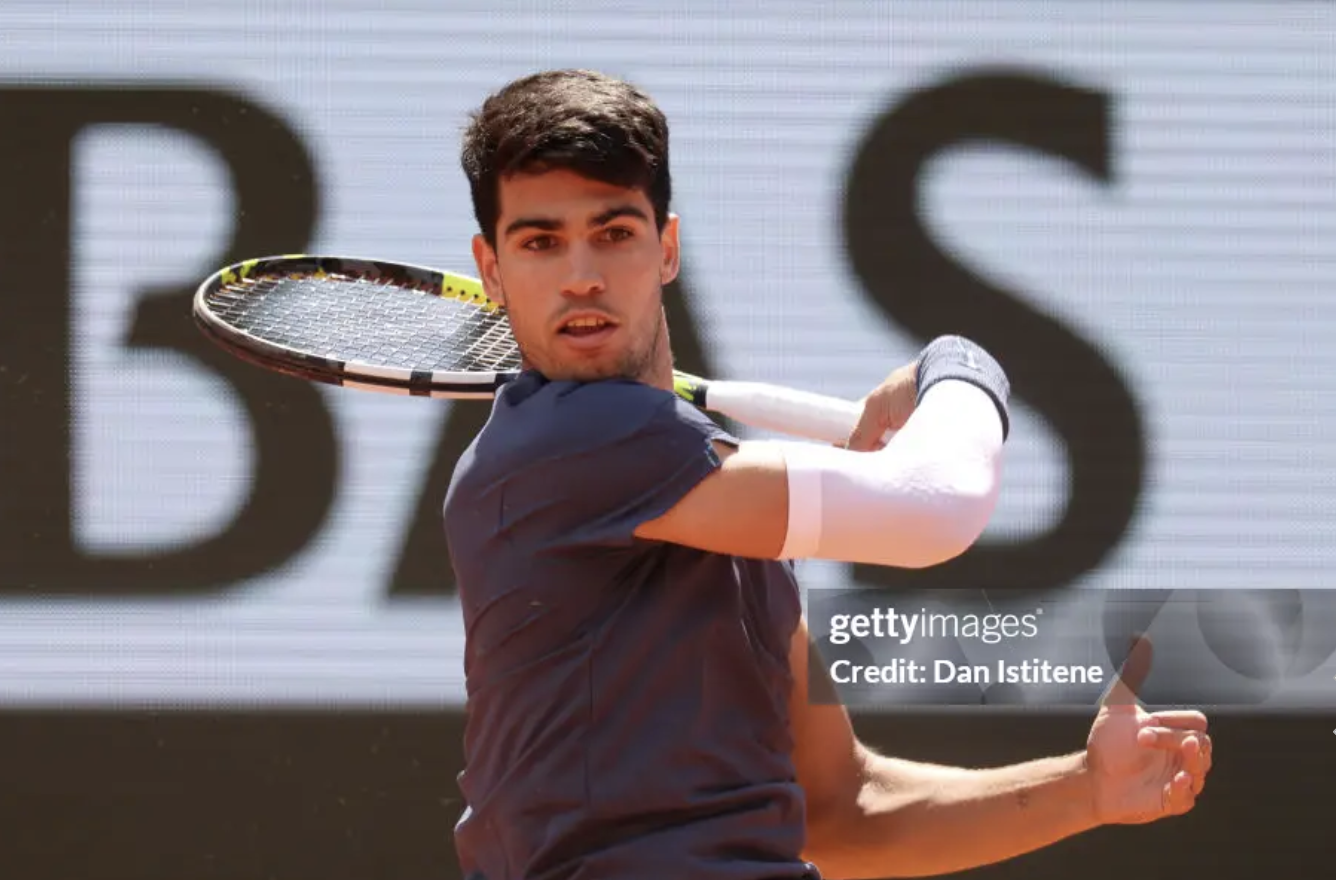
As the tennis world looks ahead to the 2026 French Open, one player’s forehand stands poised to transform the expectations surrounding clay-court play: Carlos Alcaraz. Following a period plagued by injuries in 2024, Alcaraz has made significant adjustments to his game, particularly on clay where his powerful forehand has become a formidable weapon that few can match.
Alcaraz has demonstrated a unique ability to dominate points with his forehand, which blends extraordinary power with precision. This combination allows him to dictate the flow of matches on the slow, high-bouncing clay surface of Roland Garros. Comparatively, his challengers—Jannik Sinner and Holger Rune—have different strengths, with Sinner relying on flatter strokes suited for quicker surfaces while Rune’s game can sometimes lack the patience required for long rallies on clay.
Statistical insights from 2025 reveal Alcaraz winning 68% of points when his forehand is in action on clay, which surpasses Sinner’s 62% and Rune’s 60%. This statistic underlines the significant edge Alcaraz has developed, particularly in prolonged exchanges where his ability to generate topspin creates angles that challenge his opponents.
Post-injury, Alcaraz’s evolution on the court has been tactical. After recovering from a wrist injury, he refocused his training on strengthening his legs and core, enhancing his movement on clay. The newly honed control allows him to slide into forehand shots more effectively while maintaining balance under pressure. This strategic refinement positions him advantageously against competitors like Rune, whose unpredictable positioning can leave him vulnerable during intense rallies.
In terms of tournament history, Alcaraz is no stranger to success at the French Open. Having claimed the title in 2023, he showcased his forehand’s pivotal role in his victories. Although he faced a tough five-set match against Sinner in 2025, the data shows that he improved his shot-making ability—evidenced by a 10% increase in his forehand’s spin rate from the previous year. This evolution makes him a terrifying prospect for opponents who rely heavily on defensive tactics.
Looking ahead to the 2026 tournament, there’s potential for Alcaraz’s game style to alter the prevailing strategies on clay. The ability to blend explosive power with relentless stamina is likely to redefine what it means to excel on this surface. While Sinner and Rune offer valuable challenges with their precision and athleticism, neither competitor possesses the versatility that Alcaraz’s game presents, particularly when his signature forehand is firing on all cylinders.
As anticipation builds for the upcoming French Open, Carlos Alcaraz emerges as the player to watch. His unique blend of skills, refined through a rigorous recovery and strategic evolution, positions him as a frontrunner to dominate once again. The interplay of his forehand and the evolving dynamics of his rivals suggests that the 2026 clay season could be an exciting chapter for tennis enthusiasts and bettors alike. With each match, Alcaraz’s forehand may not only shift the momentum but potentially revolutionize how clay-court tennis is played.