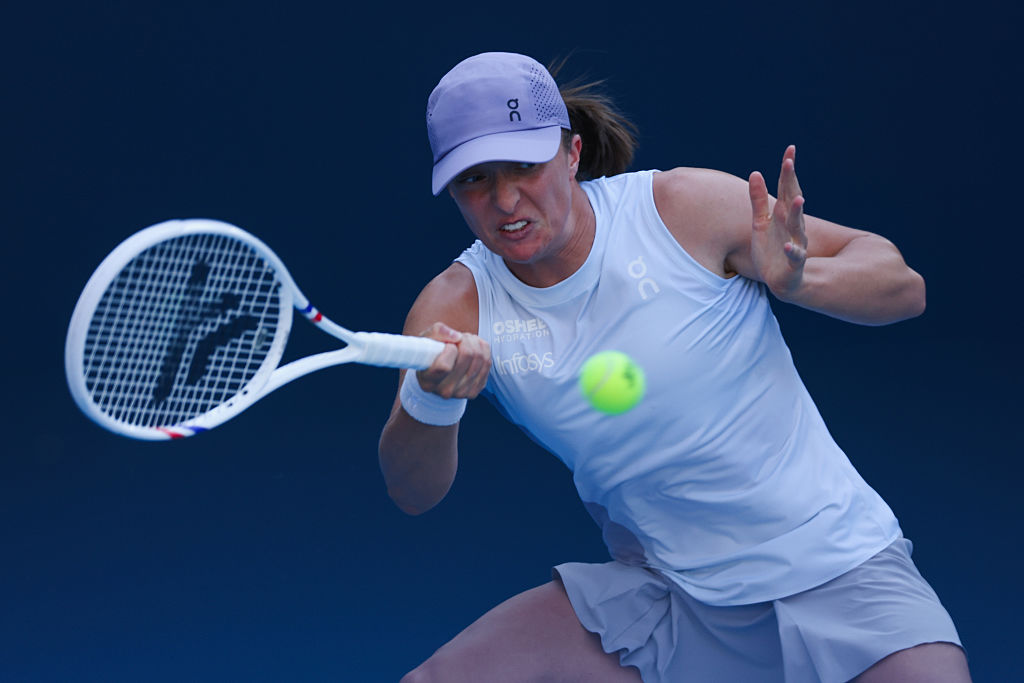
At the WTA 1000 China Open, headline performances were marred by a series of unfortunate retirements as Iga Swiatek, Emma Navarro, and Linda Noskova advanced to the Round of 16 largely thanks to their opponents succumbing to injuries. Swiatek, the top-seeded player, had a dominant showing until Camila Osorio had to retire, which propelled her into the next stage after just 41 minutes of play. Swiatek, who won the opening set without losing a game, expressed her sympathy for Osorio, highlighting the Colombian’s commitment to compete despite her injury.
The match saw Swiatek quickly establish control, breaking Osorio early, and while Osorio fought hard, managing to hold off multiple break points, she ultimately faced a leg issue that forced her to take a medical timeout. Upon resuming, Swiatek sealed the set 6-0, but Osorio’s inability to continue was a somber conclusion, as Swiatek recognized how tough it is to witness fellow players unable to compete fully.
Meanwhile, Emma Navarro, seeded 16th, also advanced after her opponent, Lois Boisson, retired while trailing. Boisson, who has recently faced injury challenges of her own, experienced a left thigh issue which ended her match early. Navarro, who showed unwavering form, will now set her sights on a match against Swiatek. Notably, both players have faced each other twice before, with Swiatek emerging victorious in straight sets on both occasions.
Adding to the array of retirements, Linda Noskova found herself in a fortunate position as she secured a victory when her opponent, Zheng Qinwen, was unable to continue due to elbow pain. Noskova had initially taken the first set, but Zheng displayed resilience and even managed to take the second set before her physical issues became insurmountable.
Other encounters in Beijing reflected similar themes of resilience and athletic prowess, such as Mirra Andreeva’s straight-sets victory over Jessica Bouzas Maneiro, which was marked by her composure and tactical play. Andreeva expressed her fondness for the conditions in Beijing, noting how they aided her ability to execute her game effectively.
Additionally, Jessica Pegula, the fifth seed, fought through a challenging match against Emma Raducanu, ultimately prevailing despite nearly bowing out after Raducanu held match points. Pegula’s remarkable resurgence in the second set, culminating in a bagel in the third, underscored her tenacity as she prepares to face Marta Kostyuk in the next round.
As the tournament progresses, the physical strains and mental pressures of this late-season event loom large, prompting discussions about the demanding nature of the WTA schedule. With many players facing injury challenges, it raises questions about the balance between performance requirements and athlete wellbeing, a dialogue echoed by several top competitors including Swiatek and other leading figures in women’s tennis.
Looking ahead, Swiatek will face Navarro, and newly emerging talents like Noskova continue to impress, indicating a potent mix of established stars and potential future champions in this year’s draw at the China Open.