The ongoing rivalry between Carlos Alcaraz and Jannik Sinner has emerged as one of the most compelling narratives in contemporary tennis, particularly as both players prepare for the upcoming Australian Open. As Alcaraz continues to demonstrate an exceptional level of performance on hard courts, his dynamic playing style contrasts sharply with Sinner’s methodical consistency.
Alcaraz’s success is reflected in his impressive 42% return points won percentage in major hard-court tournaments, which outstrips Sinner’s 38%. While such a margin may seem incremental, in the high-stakes world of tennis, these distinctions can often be pivotal in determining tournament outcomes. Analysts and fans alike are keenly observing how these percentages translate into the critical moments of matches.
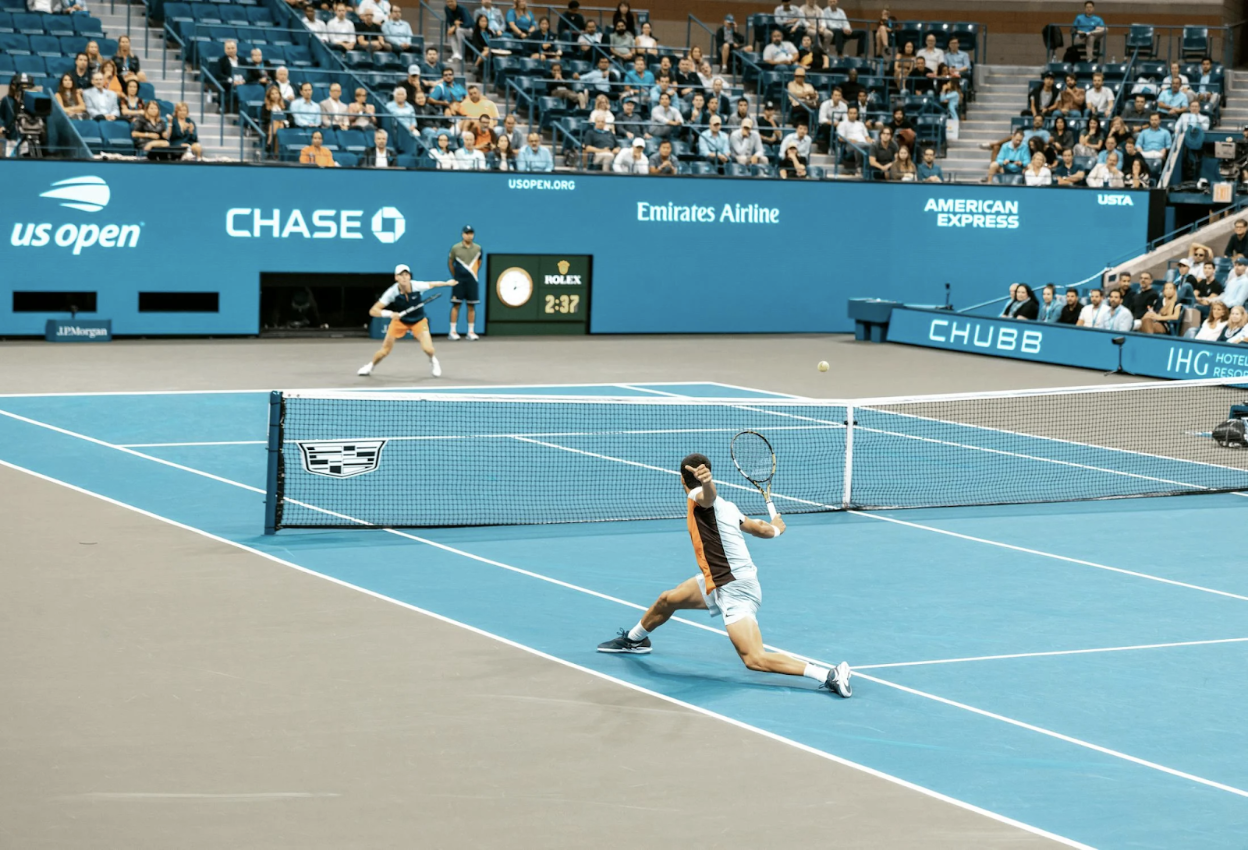
The culmination of their rivalry was notably showcased at the 2025 U.S. Open, where Alcaraz secured a decisive victory over Sinner, winning 6-2, 3-6, 6-1, 6-4. This match underscored Alcaraz’s adaptability, highlighted by his capacity to dominate serve points—achieving an astonishing 83% success rate on first serves while hitting 10 aces without a single double fault. Sinner, in contrast, faced challenges with his own serve, managing only a 48% success rate on first serves and committing four costly double faults.
Their head-to-head encounters reveal a broader trend; Alcaraz now holds a 7-2 record against Sinner on hard courts, having bested him consistently since 2024, which may have implications for Sinner’s confidence going forward. This psychological edge complicates their tactical confrontations, as Sinner must navigate the added pressure of overcoming not only Alcaraz’s formidable game but also the historical context of their battles.
A deeper look into their statistics emphasizes Alcaraz’s continued evolution as a player. His unreturned serve rate of 30.6% over the past year marks a significant increase from prior seasons, allowing him to gain powerful advantages in service games. This improvement stems from a refined serving technique that has enhanced his accuracy, decreasing the distance his serves deviate from the lines while maintaining impressive speed.
Sinner is no slouch, boasting a solid 64.2% first-serve percentage, but his numbers lose some luster when benchmarked against Alcaraz. With a lower break-point conversion rate than Alcaraz’s 50.4%, Sinner’s grasp on tight matches has proven less effective, especially against his Spanish rival.
Compounding the pressures faced by Sinner was his early exit at the Shanghai Masters, where a retirement against Tallon Griekspoor interrupted a notable nine-match winning streak in hard-court finals. This event raises questions regarding the reliability of Sinner’s consistency at critical junctures, particularly in high-pressure match scenarios.
As both players set their sights on the 2026 Australian Open, which kicks off on January 12 at Melbourne Park, Alcaraz emerges as the clear favorite. His recent performances indicate he can harness his hard-court prowess effectively on the faster surfaces in Australia, making him a daunting opponent capable of dictating the pace of play.
For Sinner to achieve success in Melbourne, he will need to reevaluate his strategy, especially concerning service effectiveness, and adapt his approach to counter Alcaraz’s relentless return. Despite Sinner’s impressive overall record since early 2024, with 110 victories out of 120 matches, his past struggles against Alcaraz render him the underdog in this rivalry.
In conclusion, while Sinner’s consistency has been commendable, Alcaraz’s dominance in their matchups and superior hard-court statistics underline his status as the more formidable force on this surface. As the players gear up for the Australian Open, the weight of their rivalry leans heavily in favor of Alcaraz, whose aggressive style and refined skill set put him in an advantageous position to continue his hard-court success. Until Sinner can devise a strategy capable of solving Alcaraz’s game, the Spaniard’s multifaceted approach to tennis will likely prevail in their future encounters.