Tuchel Addresses Bellingham’s Absence from England Squad
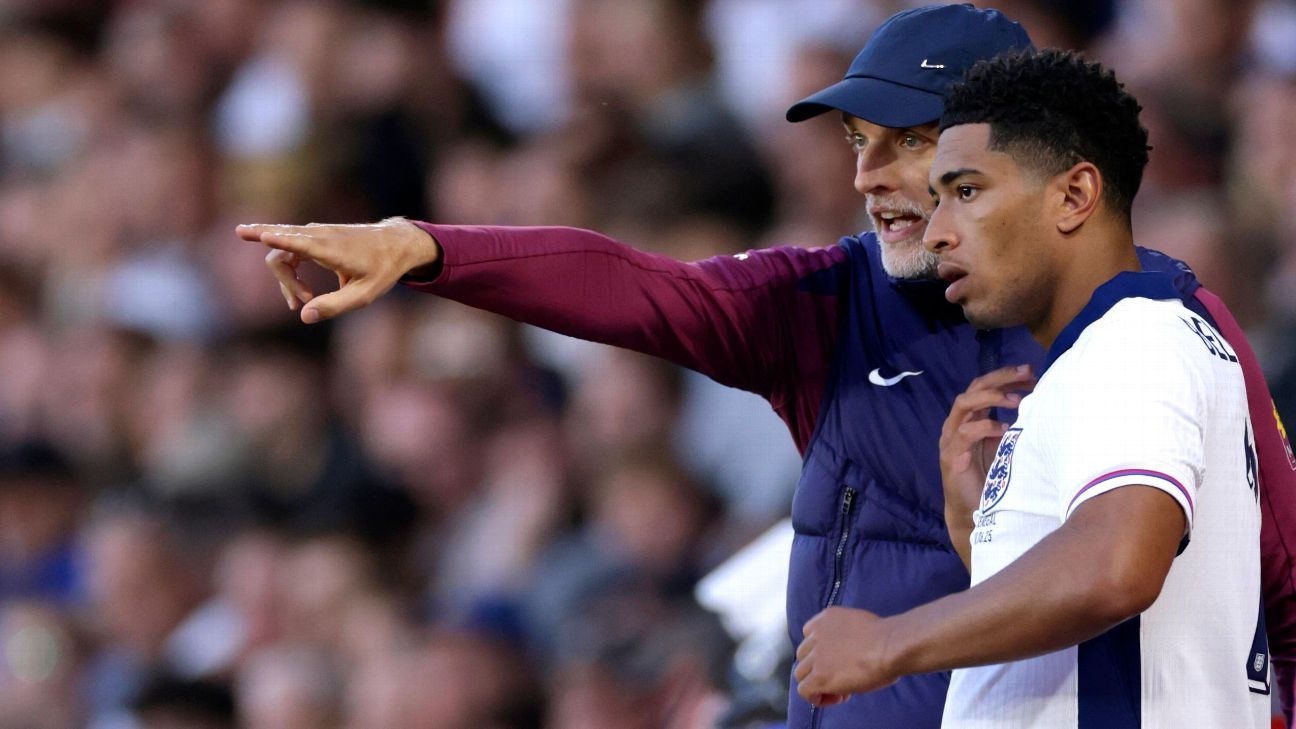
In a recent announcement, Thomas Tuchel offered insight into why Jude Bellingham was excluded from the England squad for upcoming matches against Wales and Latvia. The head coach’s decision has sparked discussions given Bellingham’s status as one of England’s standout players.
Throughout his managerial career, Tuchel has consistently shown a willingness to challenge norms and confront issues head-on, often resulting in short tenures at various clubs including Borussia Dortmund, Paris Saint-Germain, Chelsea, and Bayern Munich. This assertive approach is evident in his choice to leave out Bellingham, which seems to convey a message that transcends mere tactical considerations.
Despite Tuchel’s claim that he lacks issues with Bellingham, it appears there are underlying dynamics at play within the England camp. Reports suggest that some teammates may have found Bellingham’s demeanor challenging, given his perfectionist approach and high expectations of those around him. This raises the question of whether the criticism is justified or merely an indication of his ambition to elevate the team’s performance.
Anthony Gordon, an England teammate, expressed Bellingham’s significance to the squad, noting, “You notice when he is not there. He is a big presence, such a big player.” Bellingham’s contributions as both a playmaker and a goal-scorer are undeniably critical to England’s World Cup aspirations. His absence feels palpable among teammates, though they recognize the necessity of maintaining squad harmony.
The 20-year-old has rapidly ascended to celebrity status, having played key roles for Birmingham City at just 16 years old, amassing 282 club appearances, and earning 44 caps for England. This remarkable trajectory might explain any perceived overconfidence. However, Tuchel’s exclusion serves as a reminder that competition for places remains fierce, especially with other talented players like Cole Palmer, Morgan Rogers, and Morgan Gibbs-White vying for roles in the squad.
Last year, Tuchel stirred controversy by suggesting that Bellingham’s behavior sometimes displeased those around him. Although he later apologized for those comments, they signaled concerns about team dynamics and the conduct expected from Bellingham moving forward. Tuchel’s intent seems to be fostering a cohesive environment—something he deems essential heading into the World Cup, given past occurrences where internal rifts have disrupted teams’ performances.
Though Bellingham has recently recovered from shoulder surgery and has played impressively for Real Madrid since, Tuchel clarified that his decision was not injury-related but a reflection of the player’s current form. He wished to reward those who performed well in previous matches with a consistent lineup, making an adjustment only due to an injury to Noni Madueke, who was replaced by Bukayo Saka.
Ultimately, Tuchel’s leadership will aim to forge a squad united in purpose. Even if it ruffles a few feathers in the process, it is a calculated and brave move designed to instill a winning mentality within the team. With the World Cup on the horizon, Bellingham’s return to the squad may motivate him to demonstrate his value to the team, embodying the spirit of continuous improvement that Tuchel seeks.
n