
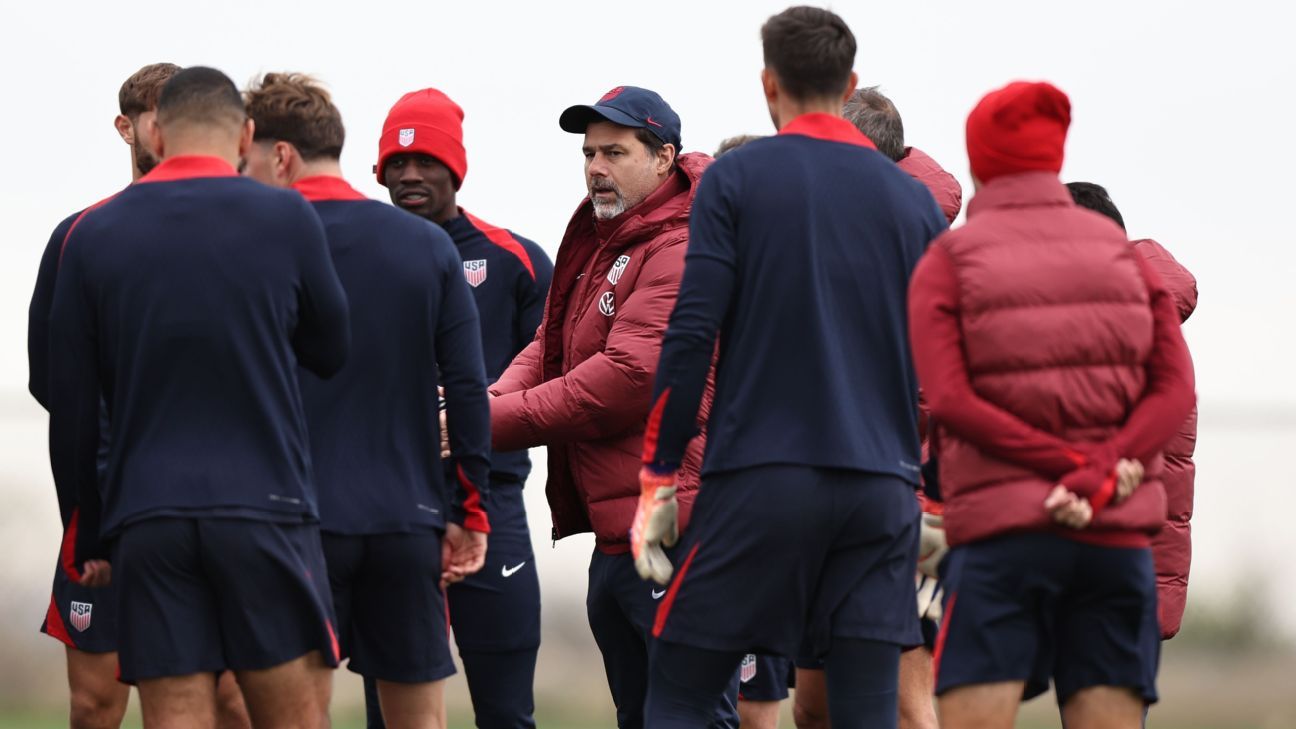
USMNT Faces Injury Challenges Under Pochettino
As the U.S. men’s national soccer team (USMNT) gears up for upcoming friendlies, they are confronted with a significant injury crisis. Under the guidance of coach Mauricio Pochettino, the team has now added Tyler Adams to a growing list of sidelined players.
Traveling across time zones can take a considerable toll on players, impacting their physical readiness for competitive matches later in the week. The rigorous travel schedule for 13 of the 24 players in the squad, all flying in from Europe, adds a layer of complexity to the recovery process. The USMNT employs a comprehensive approach to ensure players maintain peak performance, utilizing a combination of fitness experts, physiotherapists, dietitians, and technical staff members.
Jesús Pérez, the first assistant coach, emphasized the team’s commitment to incorporating the latest recovery technologies and protocols. “We strive to use every available resource to aid our players’ recovery,” Pérez said, highlighting the extensive data gathered to monitor players’ health and readiness.
Jordan Webb, head of performance for U.S. Soccer, identified four primary focus areas in recovery: sleep quality, stress management, nutrition, and hydration. Despite advancements in science and technology, these fundamental aspects remain crucial. The collaboration includes sharing recovery data with players’ clubs to ensure transparency.
Details surrounding player treatment have gained attention following injuries sustained by notable players during the last international window. Christian Pulisic of AC Milan and Malik Tillman of Bayer Leverkusen suffered muscle issues, highlighting ongoing tensions between clubs and national teams over player management. Pochettino defended the USMNT’s practices after criticisms were made regarding player workloads, asserting that player welfare is the team’s top priority.
Pérez explained the nature of Pulisic’s injury, clarifying it was a result of an unfortunate incident rather than fatigue. “It was a situation where he lost his balance in a one-on-one play,” he noted. “This wasn’t related to previous injuries or overexertion.” He reiterated the team’s thorough intake protocols in assessing player readiness when joining the national squad.
Cutting Through Jet Lag
International travel complicates recovery as it disrupts players’ routines. To combat this, the USMNT provides “fly kits” designed to help players adapt to new time zones, including dietary supplements and personalized sleep schedules. Tim Ream praised the effectiveness of these kits, recalling their usefulness during his time in England.
In addition, players utilize Normatec boots for compression therapy, enhancing circulation and muscle recovery. Upon arrival, players undergo detailed assessments, including blood and saliva tests to gauge hydration and fatigue levels. This data informs individualized training loads and recovery strategies, ensuring that players are prepared for upcoming matches.
Moreover, the team focuses on nutrition, with players receiving multiple meals daily to ensure they maintain optimal energy levels. Ream shared insights on how dietary choices impact performance, illustrating the significance of eating well before matches.
Recovering from match fatigue can be challenging, especially after high-adrenaline performances. Ream shared that he often engages in crosswords or light activities to help unwind after games. Hydration also plays a vital role, with staff actively monitoring players’ fluid intake to prevent dehydration, particularly at high altitudes.
The psychological aspect of recovery is equally important. Donnie Fuller, the USMNT’s head athletic trainer, noted that massage therapy not only helps relieve physical tension but also offers psychological benefits through informal discussions with players.
Player Compliance and Motivation
Pochettino has communicated clear expectations about adhering to recovery protocols, which players have largely embraced. Webb mentioned the necessity of understanding each player’s unique situation and adapting recovery strategies accordingly to enhance their habits over time.
USMNT nutritionist Mireia Porta highlighted how competitive dynamics motivate players to optimize their performances. “They engage in recovery assessments like it’s a competition. No one wants to lag behind,” she remarked.
Ream, who has been committed to effective recovery practices throughout his career, acknowledged the benefits of such habits in prolonging his career. “I can’t quantify how much it has helped, but I know it has significantly contributed to my longevity in the sport,” he stated.
Pochettino and his team remain dedicated to maintaining a robust recovery culture within the squad, merging cutting-edge technology and established protocols to prioritize player health and performance.
n