
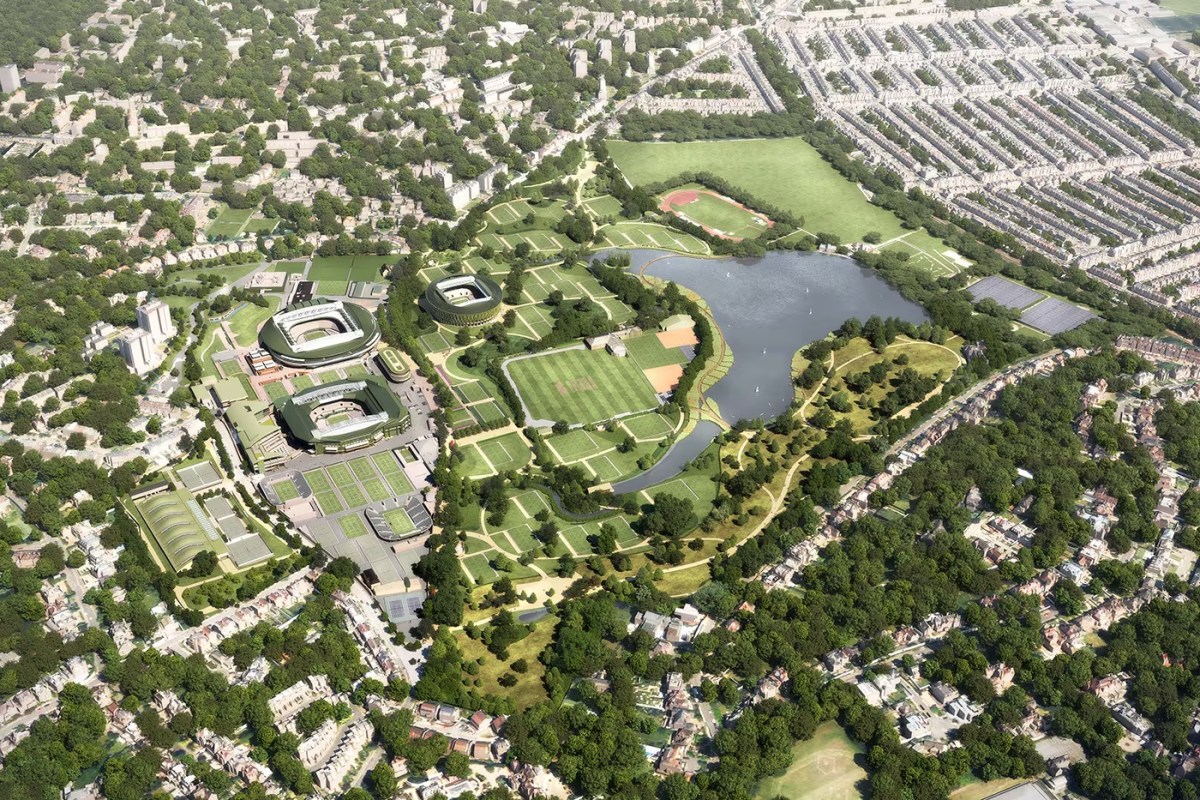
Wimbledon, the storied grass court Grand Slam, faces a challenging future as its ambitious expansion plans confront significant legal hurdles. The All England Lawn Tennis Club (AELTC) seeks to transform the former Wimbledon Park Golf Club lands into a complex boasting 38 new tennis courts and an 8,000-seat stadium, with the aim of enhancing its facilities and maintaining competitiveness against other major tournaments. Ground for this expansion was tentatively approved by the Greater London Authority (GLA) in September 2024, but legal opposition has slowed progress.
The group opposing the expansion, Save Wimbledon Park (SWP), has successfully received permission to appeal a previous court ruling that dismissed their High Court challenge against the GLA’s planning decision. Lord Justice Holgate emphasized that SWP’s arguments have merit and warrant further judicial examination. SWP argues that the expansion could adversely affect the historical environment of the area, especially since Wimbledon Park is recognized as a Grade II*-listed heritage site with ties to the renowned landscape designer Lancelot ‘Capability’ Brown.
The AELTC contends that their plans would not only safeguard Wimbledon’s standing as a premier tennis venue but also create 27 acres of accessible public parkland. However, critics allege that the expansion threatens to undermine community interests and contravenes an existing covenant that restricts land use to leisure and recreational purposes. This contentious covenant originates from a 1993 agreement, when the AELTC acquired the golf course land from Merton Council for £5.2 million.
The legal back-and-forth has been considerable: while Merton Council approved the AELTC’s expansion proposal in October 2023, Wandsworth Council subsequently rejected it due to jurisdictional disputes over the park’s boundaries. This led the matter to be escalated to the GLA, which evaluated a detailed report that ultimately sided with the AELTC.
Proponents of the development highlight the potential benefits, including job creation and enhanced public green spaces, and assert that the transformation aligns with Wimbledon’s ambitions to rival the Australian, French, and US Open in scale and experience. SWP, however, frames the conflict as a struggle of community values against corporate interests, lamenting that the AELTC has not adequately engaged with local voices.
With hearings related to this appeal lined up for January 2026, the future of Wimbledon’s expansion remains precarious. Stakeholders await the Court of Appeal’s ruling, which could have extensive implications for not just this high-profile tennis venue but also for the treatment of protected urban green spaces nationwide.
AELTC Chair Debbie Jevans has called for unity and collaboration to address shared concerns about the future, stating that the need for modernization of the facilities is more pressing than ever to satisfy the growing demand during the Championships, which last year saw an average daily attendance of over 37,000.
As preparations for the upcoming tournament take shape, the tension surrounding these plans casts a shadow over Wimbledon’s idyllic landscape, placing the club’s legacy and community relations in a critical spotlight. The outcome of the appeal will resonate far beyond tennis, influencing discussions on heritage, environmental stewardship, and community involvement in urban development.