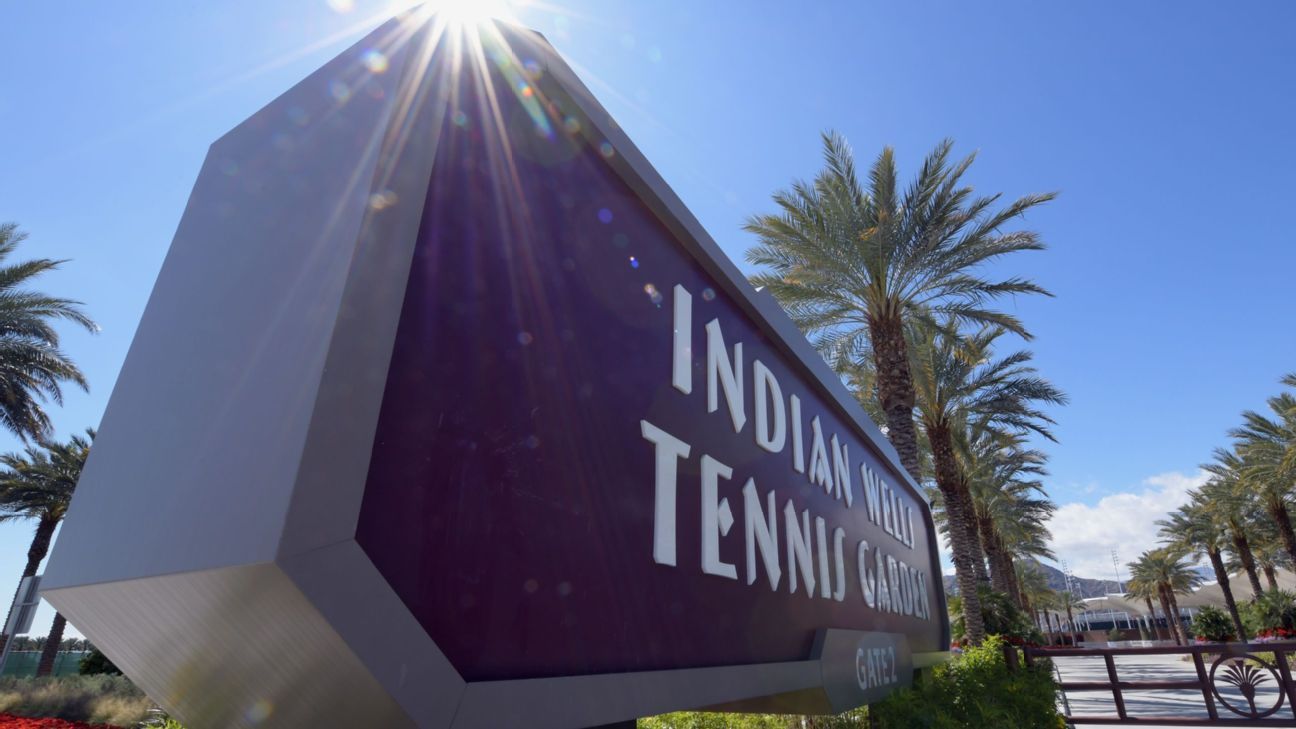
Italian tennis player Lucrezia Stefanini recently experienced a deeply unsettling incident involving threats against her and her family prior to her qualifying match at the Indian Wells tournament, a prominent event on the women’s tennis circuit. The alarming situation came to light through a video she shared on social media, where Stefanini detailed receiving a message that included a photo of a firearm, which was presumably aimed at influencing her performance for betting reasons.
In her Instagram video, Stefanini described receiving a threatening message via WhatsApp, citing explicit details about her personal life, including naming her parents and referencing her hometown. The message was intended to instill fear as she prepared for her match against Victoria Jimenez Kasintseva. Despite the psychological distress from this incident, Stefanini displayed remarkable resilience, stating, “I fought until the end to try and win my match, because I can’t permit these people to intimidate me.”
Competing as the 138th-ranked player in the world, Stefanini faced Jimenez Kasintseva in the first round of qualifying but ultimately lost in a closely contested battle, with scores of 4-6, 6-4, 6-4. Following the incident, she promptly informed the Women’s Tennis Association (WTA), which took immediate action by enhancing her security measures during the tournament.
The Italian Tennis and Padel Federation president, Angelo Binaghi, condemned the threats as “intolerable,” emphasizing that such intimidation tactics have no place in sports. He remarked on the severity of the situation, claiming it represents a dangerous trend that crosses into criminality, urging a swift legal response to deter future behavior of this kind. Furthermore, he highlighted the need for a more robust international framework to safeguard players from such threats.
Additionally, another Italian player, Mattia Bellucci, has recently reported similar threats via social media, highlighting a growing concern over the safety and security of athletes in the current sports environment. The International Tennis Integrity Agency routinely investigates incidents of match-fixing and has noted an alarming rise in abusive online content, with the WTA and the International Tennis Federation noting they tracked around 8,000 incidents classified as abusive or threatening in 2024.
In response to these developments, discussions are underway regarding the implementation of artificial intelligence tools to monitor and block harmful comments directed at players. Binaghi has called for a concerted effort not only to identify and hold accountable the perpetrators of such harassment but also to establish a more secure and protective framework for athletes internationally.