
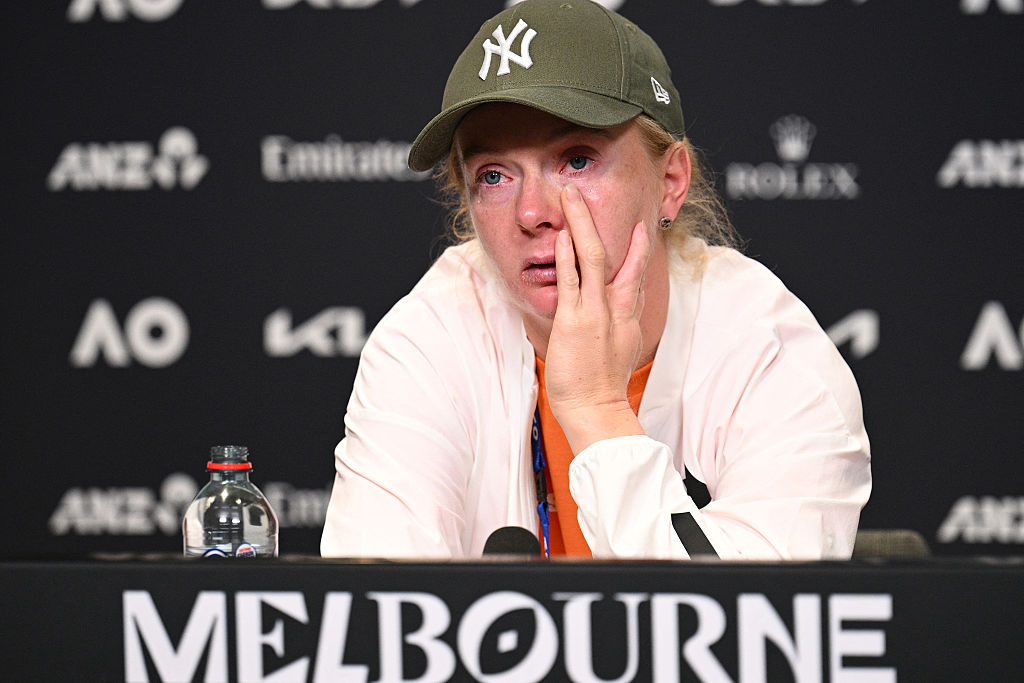
Fran Jones, the British No. 3, faced a heartbreaking exit in the first round of the Australian Open on Monday, retiring during her match against Linda Klimovicova. After a promising start, Jones was forced to withdraw while trailing 6-2, 3-2 due to an injury that hampered her movement.
The 25-year-old from Yorkshire had been eager to secure her first victory in a Grand Slam main draw, but her hopes were dashed when she slipped on the court, leading to a tear in her glute muscle. This setback compounded the challenges she had already faced coming into the tournament, having battled a groin injury in her right leg earlier in the month during the Auckland tournament.
As the match progressed on Court 15, it became increasingly evident that Jones was struggling to keep pace. Her frustration peaked after losing her serve in the second set, prompting her to seek medical assistance. Eyewitnesses reported that she was visibly emotional while receiving treatment, with tears reflecting her disappointment and pain.
In a candid post-match interview, Jones expressed her turmoil, conveying how difficult it was to consider whether to continue competing in light of her injuries. “Normally, I can keep my composure, but today it was challenging,” she admitted. Discussing her slip leading to the injury, she remarked, “I felt something pull in my glute. At that point, it was hard to focus on the match anymore.”
Jones had arrived in Melbourne with a career-high ranking of 69, marking her first direct entry into a Grand Slam without the need for a wild card. This context made her early exit all the more painful, especially considering her recent victory over a top 20 player in Auckland, which had raised her expectations heading into the tournament.
Throughout her career, injuries have been a persistent hurdle for Jones. She has spoken about how her genetic condition, Ectrodactyly Ectodermal Dysplasia, which affects her limb formation, has not directly led to her injuries but acknowledges the physical challenges she faces. “I don’t attribute my injuries to my condition; it’s been about finding the right team and guidance,” Jones explained, highlighting her ongoing journey to improve her physical fitness and skill.
Reflecting on her experience at the Australian Open, which she holds dear, Jones said, “It pains me to exit this way. I’ve always looked forward to this slam, and this was my moment to show what I could do.” The emotional toll of the situation was evident, but Jones also expressed a determination to recover and strategize for the future. “I have to think about what’s best for me moving forward,” she said, hinting at her commitment to resilience amid adversity.
Having retired from three of her five matches at previous Australian Open appearances, Jones is now focused on establishing consistency in her performances while managing her health. After a breakthrough season last year, where she set her sights on breaking into the Top 100, Jones is determined to push through these challenges and find a way to compete effectively at the highest levels of tennis.