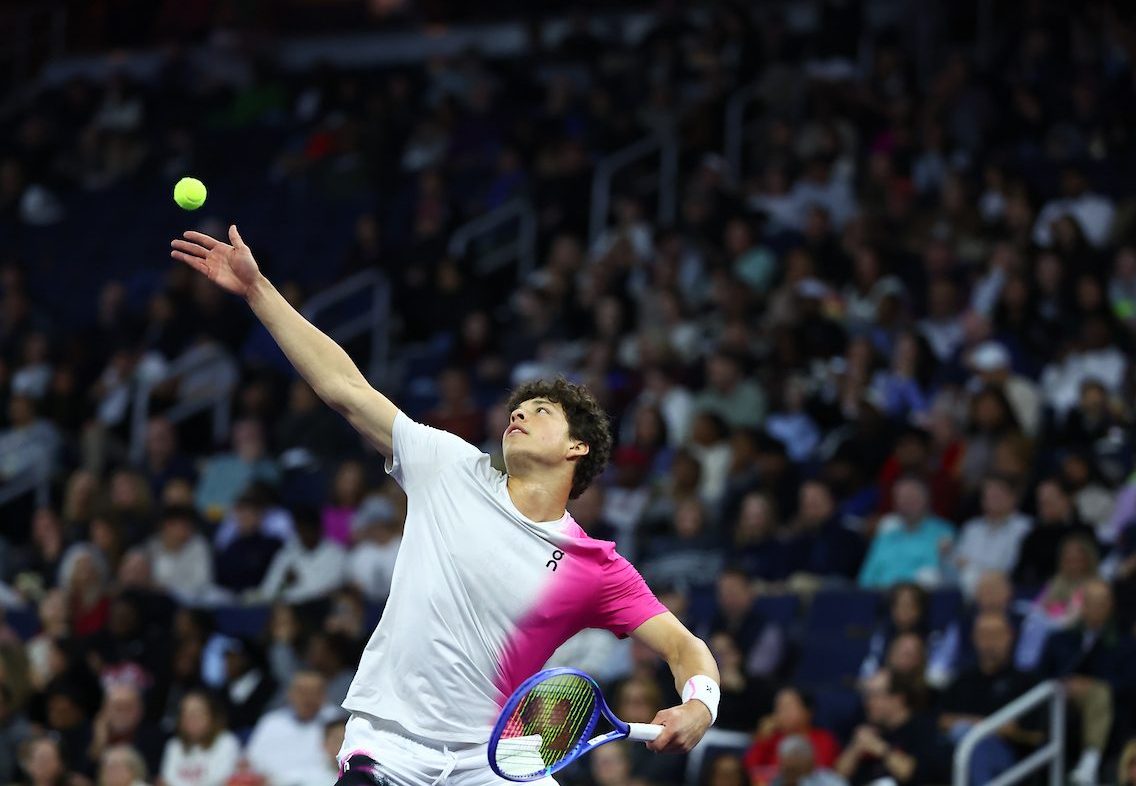

As the sun set over the prestigious hard courts of the US Open, a palpable sense of anticipation enveloped the stadium. Spectators settled in, their attention focused on two of tennis’ brightest stars. The atmosphere was electric, yet for the players on the court, the battle was as much mental as it was physical. In a sport where every point can hinge on a fraction of a second, the mental game often becomes the ultimate decider.
The complexity of mental fortitude in tennis cannot be overstated. While physical prowess remains an undeniable component of success, the quiet voice within each player plays an equally significant role. Whether it’s the pressure of the match point or the tension of a crucial breakpoint, the ability to maintain composure under fire is what separates champions from challengers.
Take the recent showdown between Novak Djokovic and Carlos Alcaraz in the final of the Indian Wells tournament, where Alcaraz emerged triumphant with a scoreline of 6-5, 6-4. Djokovic, a seasoned veteran and one of the greatest to ever play the game, displayed moments of brilliance but fell short in the crucial moments. The mental stakes of high-pressure tennis were on full display as Alcaraz, despite his youth, exhibited a remarkable level of poise. His mental clarity in decisive moments enabled him to hold his nerve and seize victory, showcasing how critical psychological resilience is in contemporary tennis.
Notably, emerging players face unique challenges regarding mental toughness. Increased media scrutiny and the weight of expectations can lead to performance anxiety, which often manifests during high-stakes matches. Historical precedents remind us that even the most gifted athletes, like the young Maria Sharapova or Andy Murray in his early years, struggled with the mental side of the sport before discovering their winning formula.
As we analyze the pressure dynamics within a match, it’s important to understand how stress influences performance. A study published in the Journal of Sports Psychology reveals that under pressure, even highly ranked players can experience a dip in decision-making speed and shot accuracy. This phenomenon explains how a player leading 40-0 can suddenly find themselves at deuce within minutes, showcasing that mental resilience is as imperative as technical skill.
Top-tier academies are increasingly integrating mental training with physical practice. Techniques such as visualization, mindfulness, and controlled breathing exercises are becoming foundational aspects of training regimens. Coaches now routinely guide players to visualize scenarios like tie-break points, preparing their minds to respond effectively when those situations arise during matches.
The effects of such training aren’t limited to the professional circuit. Recreational players can also benefit from integrating mental strategies into their games. A simple practice of taking a breath between points or implementing a personal ritual can help regain focus and enhance performance. Clubs are encouraged to foster a supportive environment where effort is rewarded, and resilience is cultivated rather than solely focusing on victory.
As we look to the future of tennis, it is evident that mental toughness will continue to play an indispensable role. Players must cultivate this aspect to thrive in an increasingly competitive landscape where every match is a test of both skill and spirit. Through continual mental training, players – from aspiring juniors to seasoned professionals – can equip themselves with the tools necessary to navigate the demands of the sport. The journey may be challenging, but the rewards are immeasurable, making mental fortitude the unsung hero of tennis success today.