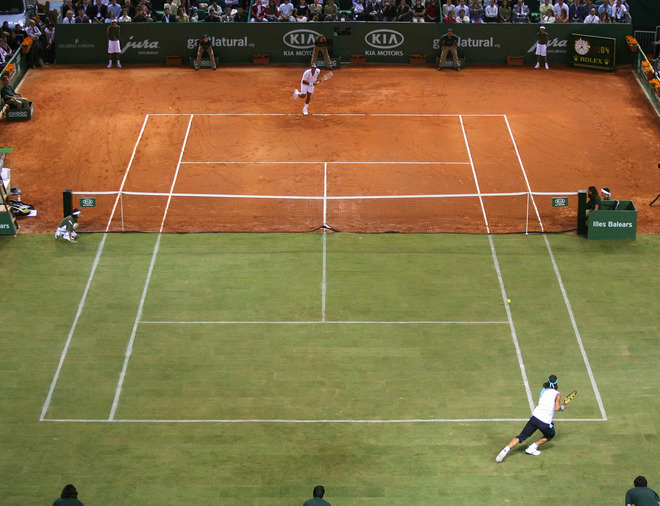
The world of professional tennis is in full swing as we approach the exciting transition from the clay courts of Roland Garros to the lush greens of Wimbledon. This shift in surfaces not only impacts the schedule but also alters the playing styles and strategies of top players competing in these iconic tournaments.
As the clay season wraps up, players like Novak Djokovic, who recently clinched his 24th Grand Slam title at the French Open, are pivoting their focus towards grass. Djokovic, currently ranked world No. 1, demonstrated his unparalleled skill and resilience in Paris, defeating Stefanos Tsitsipas in a gripping final that ended with a scoreline of 6-3, 7-5, 6-2. The victory further solidifies his place in tennis history, yet the challenge that lies ahead on grass presents a different set of obstacles.
Grass surfaces are fundamentally distinct from clay, characterized by their faster pace and lower bounce. This necessitates a shift in player techniques and tactics. For instance, aggressive serve-and-volley plays become more pronounced as players capitalize on the quick points. The effectiveness of a solid serve, as exemplified by players like Nick Kyrgios and John Isner, can be a game-changer on this particular surface, where points are often decided in a matter of seconds.
However, transitioning to grass isn’t without its difficulties. Injuries can pose significant challenges, as seen when Daniil Medvedev, currently ranked No. 3, withdrew from the Dutch Open due to a persistent back issue. Medvedev’s absence raises questions about his fitness as Wimbledon approaches; players must be at their physical best to adapt to the demanding nature of grass-court play.
Moreover, players like Ashleigh Barty and Iga Swiatek have also started preparing for the grass season, balancing practice sessions with recovery to ensure they can compete effectively. Barty, who previously triumphed at Wimbledon in 2021, is viewed as a strong contender. Meanwhile, Swiatek’s unstoppable momentum on clay will be put to the test as she seeks to replicate her success over the coming weeks.
As the tennis community buzzes with anticipation for Wimbledon, the focus is not only on individual players but also on how the changes in surface dynamics will influence match outcomes and tournament narratives. The ability to smoothly transition between playing styles will undoubtedly separate the top contenders from the rest.
With the grass season kicking off in various ATP and WTA events leading up to the 2024 Wimbledon Championships, tennis enthusiasts are eager to see how the adjustments in technique and condition will unfold. As players engage in this critical phase, fans are reminded that the beautiful game of tennis is as much about adaptability as it is about skill. The forthcoming weeks promise thrilling matchups and unexpected twists as the best in tennis battle it out on the hallowed lawns of Wimbledon.