In the realm of professional tennis, the serve represents a critical juncture where a match can be dictated right from the outset. It is not merely a ceremonial initiation; it sets the tone for rallies, impacts court positioning, and often influences the eventual outcome of points. A well-executed serve allows players to command the game, while an inaccurate one can leave them scrambling on the defensive.
Analyzing a player’s serve is essential for both fans and analysts alike. For those who engage in tennis betting, assessing serve performance becomes part of a broader strategy. They often compare odds and bonuses from sportsbooks like Fonbet, evaluating not just player form but also how a player’s serving technique can factor into match outcomes.
The serve is regarded as the most technically demanding shot in tennis, requiring a blend of coordination, timing, balance, and an efficient kinetic chain. Unlike exchanges that occur during baseline rallies, the serve is under the sole control of the server, making technique critical.
The serving process is a delicate interplay of several movements. It begins with the stance and toss, followed by a loading phase, upward drive, shoulder rotation, arm extension, and finally, the crucial pronation. If one element falters—a faulty toss or an improper knee bend—the entirety of the serve can diminish in power and accuracy.
A prime serve hinges on the effective transfer of energy from the ground upwards. It starts with the legs generating force, followed by a rotation of the hips, coiling and uncoiling of the torso, and finally, the arm delivering the power. Players who rely excessively on their arm for serves often struggle to maintain sustainable power and consistency as matches progress.
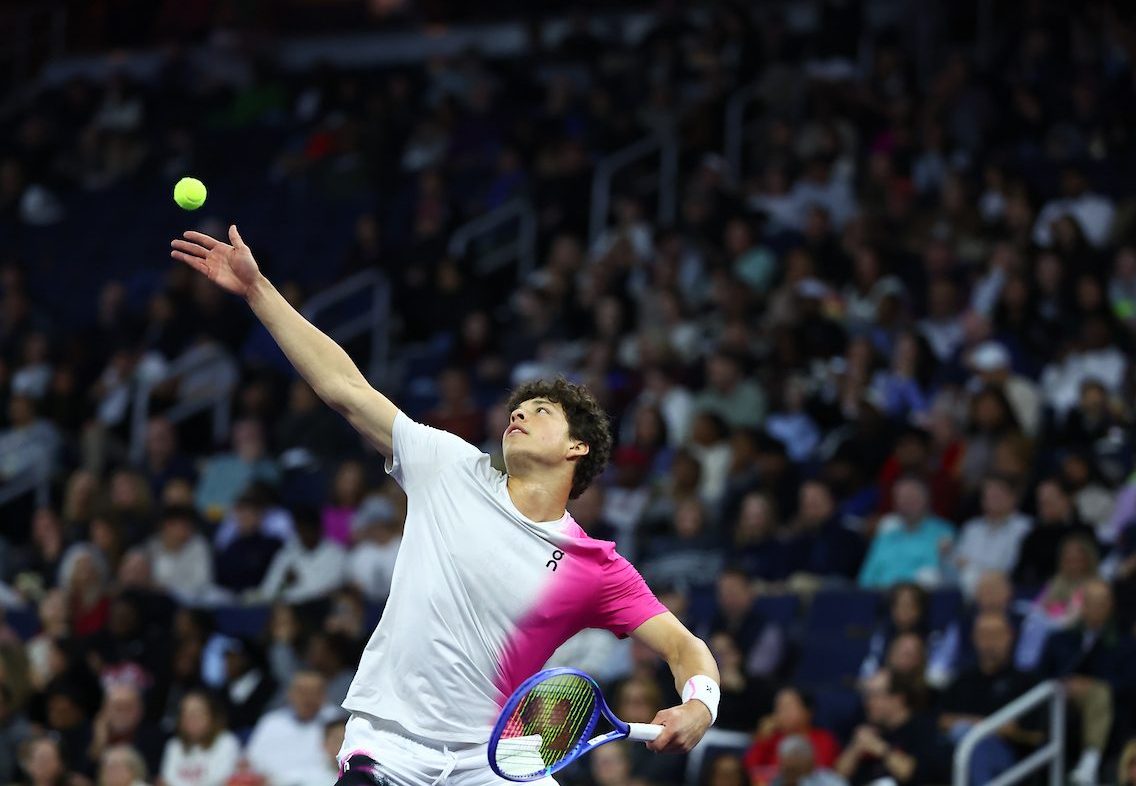
The toss, frequently underestimated, is fundamental for a repeatable serve. A uniform toss allows for consistent mechanics with each point played. Elite servers position themselves under the ball rather than chasing after it. This approach enables them to maintain a high contact point, providing forward momentum and stability.
When discussing serve types, variation proves crucial to distinguishing strategic players from those who are merely predictable. An effective server disguises their intention, making the preparation for different types look identical.
The flat serve, characterized by its speed and directness, is most commonly utilized as a first serve. It aims to place immediate pressure on the opponent, though it requires remarkable accuracy to execute correctly.
Contrastingly, the slice serve creates a sideways curve post-contact, effectively pulling opponents off-balance, particularly on faster courts. It demands a different racket path and a deft touch to generate the required side spin.
The kick serve is another important variant, utilizing topspin to produce a higher bounce. It serves as a reliable second serve option, as it elevates net clearance and minimizes the risk of double faults. The upward brushing motion coupled with proper shoulder rotation is vital for this serve.
On a psychological level, a dependable serve creates pressure on opponents. When a player consistently holds their serve, it amplifies the urgency for the challenger in their own service games, tightening the match dynamics. Conversely, frequent serving errors can embolden the returner, leading to momentum shifts.
Confidence in serving can reshape a player’s overall strategy. Players with powerful serves may take more calculated risks on returns, knowing they can recover with their strong delivery.
Examining three top players elucidates the diversity in serving styles. Novak Djokovic emphasizes balance and precision; while not the fastest serve, it is notably reliable. Roger Federer’s fluid motion prioritizes timing and efficiency, allowing him to adapt quickly. Nick Kyrgios, in contrast, relies on explosive arm speed and power. Though different in mechanics, each player demonstrates technical coherence and repeatable form.
For young players, mastering the serve is paramount for long-term development. Early focus on proper mechanics helps reduce injury risks and establishes a foundation for sustainable power. Coaches emphasize grip selection and sequence of leg drives during formative training, as ingrained flaws can be challenging to rectify later.
Training the serve hinges not only on technical skill but also on tactical awareness. Regularly practicing placement, rhythm variations, and the art of disguise is critical to shaping a complete player.
Masters of serve do not necessarily conform to any specific professional template but understand the underlying principles: generating power from the ground up, ensuring a consistent toss, practicing both first and second serves diligently, training placement as rigorously as speed, and utilizing video analysis to pinpoint timing errors.
Ultimately, the serve is more than just a shot; it’s a crucial element that can dictate match pacing and outcomes. As tennis players continue to refine their serves with discipline and clarity, they position themselves more favorably in high-stakes matches, where even slight advantages can lead to significant results.