Manchester United Triumphs Over Brighton with a 4-2 Victory
Referee: Anthony Taylor
VAR: Michael Oliver
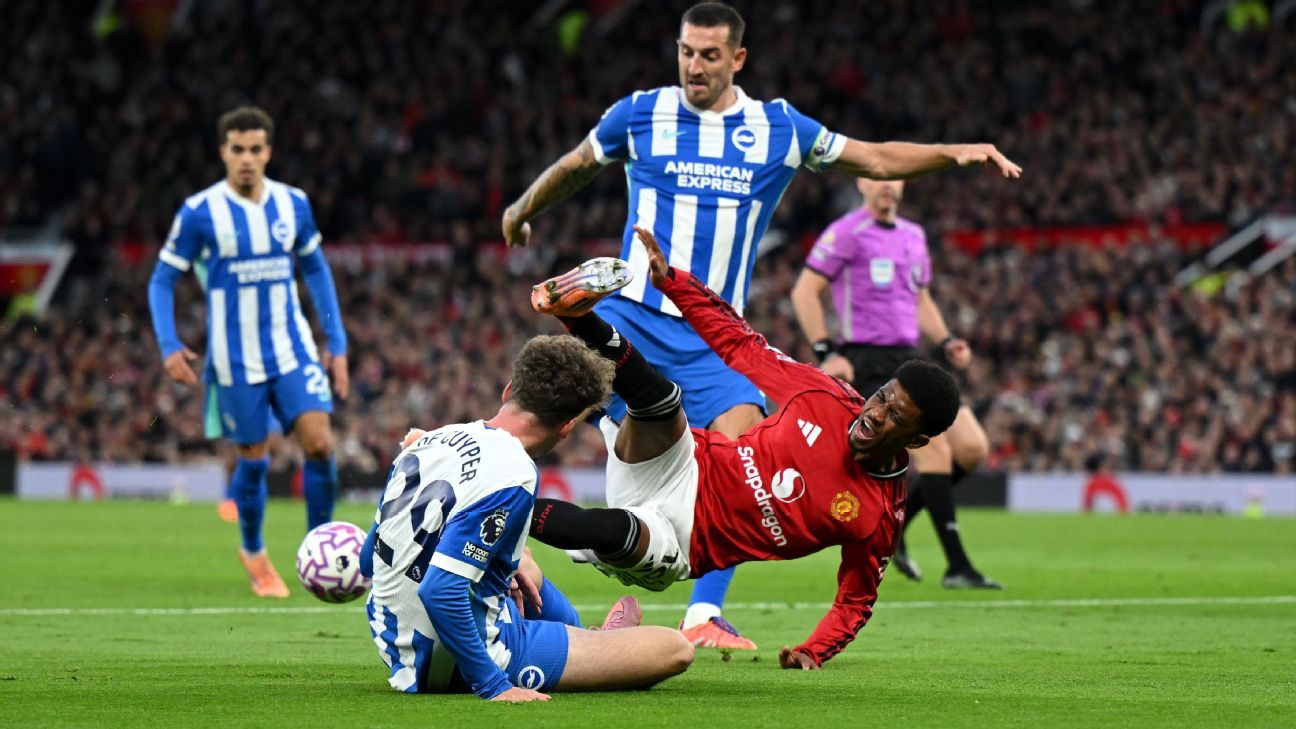
Incident: Manchester United’s penalty appeal
Time: 15th minute
Andy Davies, a sports analyst, reported on the ongoing discussions surrounding the Video Assistant Referee (VAR) and its role in English Premier League decisions. This season has highlighted significant incidents where VAR protocol and regulations have sparked debates among fans and analysts alike.
Andy Davies (@andydaviesref) is a former referee with over a decade of experience at the highest levels of English football, including responsibilities in the VAR domain throughout the Premier League. His insights into the officiating processes enhance the understanding of how decisions are reached during matches.

Time: 61st minute
Incident Details: Manchester United’s Bryan Mbeumo netted the third goal following a turnover by Brighton in midfield. However, Brighton protested a potential foul, claiming that Luke Shaw had held Mathys Rutter during the build-up. Referee Anthony Taylor, who had a clear view of the situation, opted against calling a foul, stating it did not meet the threshold set by either himself or his officiating team in the Premier League.
VAR Review: As standard procedure, VAR examined the lead-up to the goal for any missed infractions. The interaction between Shaw and Rutter was scrutinized but deemed minimal, with no significant effect on Rutter’s continuation of play. Consequently, the decision to allow the goal stood.
Had the VAR team seen substantial evidence contradicting Taylor’s original assessment, they would have intervened. However, it was concluded that the contact did not warrant intervention since it was a fleeting hold with negligible impact.
Conclusion: After evaluating the situation, it was determined that Taylor’s on-field ruling was correct, and Oliver’s choice not to involve VAR was justified. For a holding foul to be established, referees look for criteria such as the severity or impact of the hold within that critical area of the pitch.
In this context, Shaw’s action was judged to be a minor and transient hold, not affecting Rutter’s ability to play. Notably, Rutter’s own decision to halt play seemed driven by his expectation of a free kick rather than any significant foul committed against him.
These scenarios emphasize the importance of assessing events in real-time, as static images may misrepresent the nature of contact. While a still frame might suggest a foul had occurred, immediate observations reveal that Shaw’s conduct fell within the bounds of typical football interactions, which both Taylor and Oliver would have recognized.
n