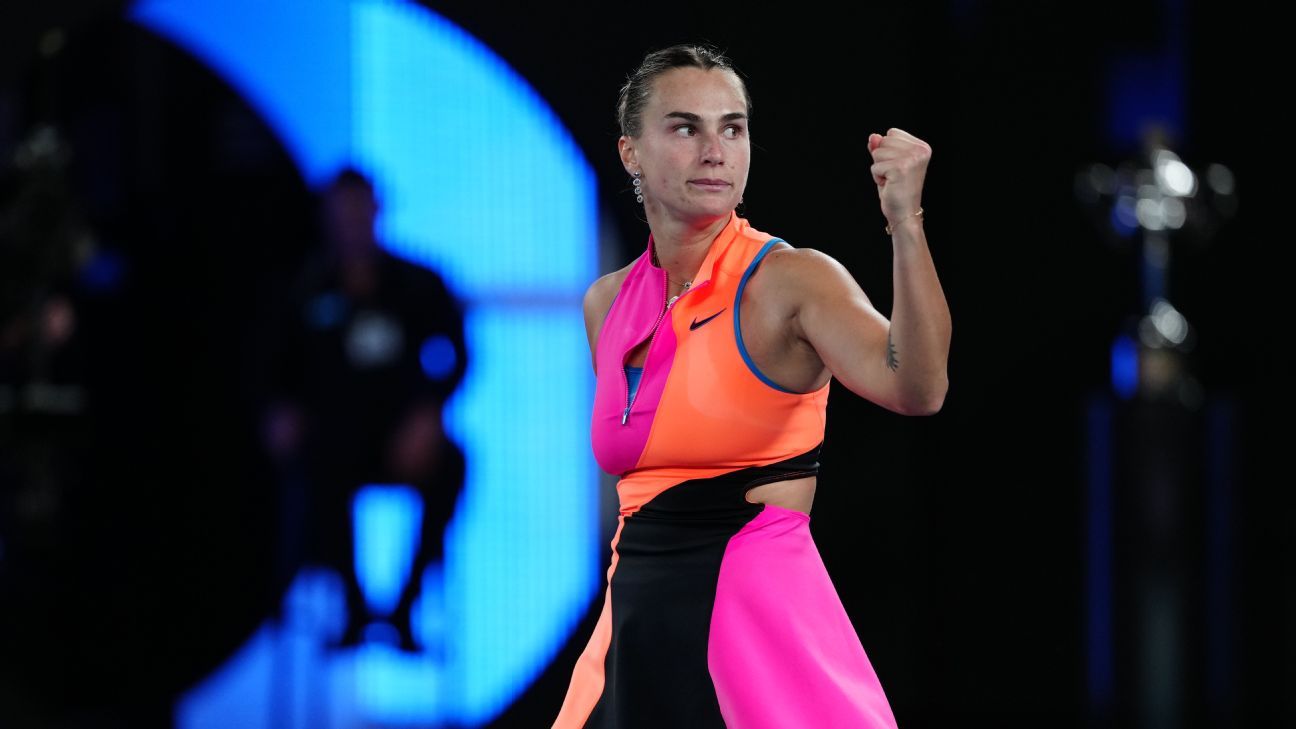
In a recent gathering at the Italian Open, Aryna Sabalenka, the world’s top-ranked female tennis player, voiced her strong stance concerning the financial struggles faced by players on the professional circuit, especially regarding their share of revenues from major tournaments. Sabalenka, who celebrated her birthday while in Rome, expressed her belief that players should seriously consider a boycott of Grand Slam events if their compensation does not improve significantly.
Sabalenka’s comments came in the wake of a statement issued by several leading players, including fellow world No. 1 Jannik Sinner, who expressed “deep disappointment” over the financial arrangements surrounding the French Open prize money. Though organizers recently announced an increase in overall prize money for Roland Garros by approximately 10%, bringing it to around 61.7 million euros (approximately $72.1 million), players argue that the percentage of revenue they receive continues to dwindle.
According to the prepared statement from the players, the share of tournament revenues allocated to players at Roland Garros has decreased from 15.5% in 2024 to just 14.9% projected for 2026. This sentiment was echoed by notable players like Iga Swiatek, a four-time champion at the French Open, who stressed the need for proper channels of communication with tournament organizers for effective dialogue.
The prize money structure offers considerable sums to champions—2.8 million euros for singles titleholders and 1.4 million euros for runners-up. However, the players argue that with soaring revenues, the increase in prize money does not match the pace of income growth from the tournament, which accrued about 395 million euros in 2025—a 14% increase year-on-year. They point out that despite significant revenue growth, the players’ share is expected to fall further below acceptable levels unless action is taken.
Jasmine Paolini, an Italian player who recently achieved finals appearances at both the French Open and Wimbledon, also articulated her view on the possibility of a boycott. She noted that unity among male and female players could push for change, highlighting the disparity in benefits provided by individual tours like the WTA and ATP compared to the Grand Slam events.
The situation surrounding prize money at Grand Slams has become increasingly contentious, particularly when considering that tournaments such as the Australian Open and the U.S. Open have previously raised player compensation by substantial margins of 16% and 20%, respectively. Players feel more must be done to ensure fairer compensation in line with the revenue generated by these prestigious events.
As anticipation builds for the upcoming French Open, which begins on May 24, the discussions surrounding player compensation will undoubtedly remain a focal point of interest as athletes advocate for their rights and seek sustainable solutions for better financial terms in the sport they dedicate their lives to.