In recent years, the slice forehand has notably diminished in the professional tennis landscape, with its role evolving into that of a rare tactical choice rather than a staple shot in a player’s arsenal. Once celebrated for its strategic advantages, the slice forehand now accounts for a significantly lower percentage of shots executed by top players, indicating a stark shift in the game’s dynamics.
A deep dive into the statistics reveals that players ranked within the ATP’s top 50 are using this shot less than half as often as they did just a decade ago. The evolution into a game dominated by heavy topspin and relentless baseline exchanges has overshadowed the crisp precision of the slice, a transition that many argue has drained character and flair from the sport.
The advancement of racquet technology, particularly the introduction of polyester strings strung at low tension, has fundamentally altered how players approach baseline rallies. These modern strings provide ample power and spin, allowing competitors to generate winning shots with relative ease. Consequently, the need for a well-timed slice, which requires finesse and setup, has diminished as players can now execute powerful shots from less favorable positions.
Data from the 2025 season indicates a staggering 62 percent decline in slice usage on hard courts compared to figures from 2018. While some coaches view this evolution as a testament to progress, others lament the loss of a technique that once showcased a player’s tactical intelligence and creativity. Young players, especially those under 25, tend to dismiss the slice in favor of powerful forehands, rendering the shot nearly obsolete in contemporary match play.
The shift in shot selection mirrors a broader trend observed in sports betting, where success often relies on broader strategies rather than narrowing one’s focus to a single favored outcome. Like seasoned gamblers who explore various games to increase their chances of winning, players who integrate different shot types into their game can uncover their opponents’ vulnerabilities and adapt their strategies for long-term success.
The current tennis environment, however, favors a relentless power-hitting style that has taken the thrill out of shot variety. An analysis of match patterns reveals a significant reduction in the diversity of shots throughout three-set matches, with a 22 percent decrease in the number of shot types employed compared to a decade prior. The slice, which used to be a strategic reset during extended rallies, has been largely replaced by consistent top-spin returns that contribute to a more monotonous style of play.
Looking back, players commonly utilized slice shots to target their opponent’s weaker backhands and create opportunities for net approaches. In contrast, the current philosophy emphasizes standing further behind the baseline and engaging in prolonged rallies until an error occurs, leading to more predictable and risk-averse tennis.
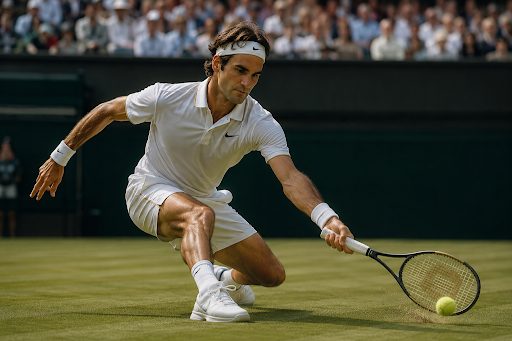
Moreover, the type of playing surface remains a critical factor in the utilization of the slice. Grass courts, once ideal for the low-bouncing nature of the slice, have become less favorable following a decision to slow down play. Adjustments made to the courts at Wimbledon in 2024 saw a rise in bounce height, further diluting the effectiveness of slice shots. Currently, clay remains the last refuge for players who still employ the slice with any regularity.
Statistics from the 2025 season reveal the following breakdown of slice forehand usage among the top 50 players across different surfaces:
– Grass: 3.2%
– Slow Hard: 4.1%
– Fast Hard: 2.8%
– Clay: 7.9%
Particularly on clay, where variation and strategic patience thrive, players maintain a higher win rate when utilizing slice shots frequently, showcasing that an effective blend of techniques remains advantageous.
As we look ahead to the 2026 season, the application of the slice forehand appears to be relegated to mere moments of desperation rather than tactical foresight. Many junior players emerging from academies do not practice the shot, resulting in a lost art form that once highlighted a player’s skill set. Former champions who achieved success without the reliance on powerful topspin now watch as a crucial aspect of tennis slowly fades into the background. The future will dictate whether a renaissance of the slice will occur or if it will remain a forgotten relic in the game’s ever-evolving narrative.